
Mentoring for Magnet® Recognition: Strengthening Nursing Excellence Through Automation
Jun. 12, 2026

Healthcare organizations pursuing Magnet® Recognition are continually looking for strategies that strengthen professional development, improve nurse retention, support leadership succession planning, and advance nursing excellence.
One strategy consistently connected to all of these goals is mentoring.
The ANCC Magnet® Recognition Program recognizes the value of mentoring as a key component of professional development, leadership growth, and succession planning. Magnet® organizations are expected to foster a culture of mentoring and demonstrate how mentoring relationships support nurses across all levels of practice.
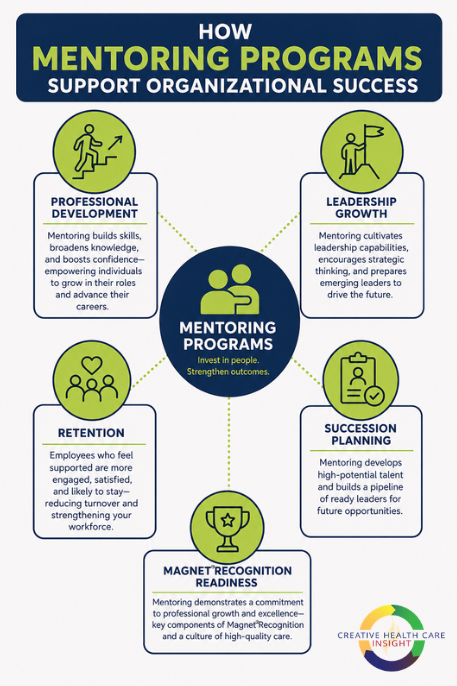
Effective mentoring programs help organizations develop future nurse leaders, transfer critical knowledge, strengthen workforce engagement, and support career advancement. They also provide valuable evidence of an organization’s commitment to professional growth and nursing excellence, both important elements of the Magnet® framework.
As healthcare organizations face workforce shortages, leadership transitions, and increasing demands for professional development, structured mentoring programs have become more important than ever. Rather than serving as a standalone initiative, mentoring functions as a strategic workforce development tool that helps organizations build leadership capacity, strengthen professional practice, and support long-term Magnet® success.
What Is the Connection Between Mentoring and Magnet® Recognition?
Mentoring plays an important role within the ANCC Magnet® Recognition Program as part of an organization’s commitment to professional development, leadership growth, and nursing excellence. Magnet® organizations are expected to foster environments that support mentoring relationships and demonstrate how those relationships contribute to professional practice and career advancement.
Effective mentoring programs help organizations:
- Support professional development and career progression
- Develop future nurse leaders
- Strengthen succession planning efforts
- Promote knowledge sharing and professional collaboration
- Increase nurse engagement and workforce satisfaction
- Support retention of both experienced nurses and emerging talent
- Foster lifelong learning and continuous professional growth
Beyond individual development, mentoring helps create a culture where nurses feel supported, connected, and invested in the organization’s success. These relationships strengthen professional practice, encourage leadership readiness, and contribute to a healthy work environment; key characteristics commonly associated with Magnet® organizations.
As organizations pursue initial Magnet® designation or prepare for redesignation, structured mentoring programs can provide meaningful evidence of their commitment to developing nurses, supporting professional growth, and sustaining nursing excellence over time.

How Mentoring Strengthens Professional Development
Professional development remains a cornerstone of nursing excellence.
Nurses today are expected to continually expand their knowledge, pursue certifications, adapt to changing practices, and contribute to quality improvement initiatives. Mentoring provides the guidance and support necessary to help nurses successfully navigate these expectations.
Through mentoring relationships, nurses can:
- Explore career pathways
- Pursue specialty certifications
- Develop clinical expertise
- Strengthen professional confidence
- Expand leadership capabilities
- Build professional networks
Mentors help bridge the gap between education and practice by providing personalized support, encouragement, and real-world insight.
For newer nurses, mentoring can accelerate growth and confidence. For experienced nurses, mentoring offers opportunities to continue learning while sharing expertise with the next generation of caregivers.
Mentoring Supports Leadership Development and Succession Planning
One of the most significant workforce challenges facing health care organizations today is preparing future leaders.
As experienced nurse leaders retire or move into new roles, organizations must ensure they have strong leadership pipelines in place. Without intentional succession planning, valuable organizational knowledge and leadership expertise can be lost.
Mentoring serves as one of the most effective succession planning strategies available to health care organizations.
By connecting emerging leaders with experienced mentors, organizations can intentionally develop leadership competencies while preserving institutional knowledge.
Mentoring can help prepare nurses for roles such as:
- Charge nurse
- Preceptor
- Clinical educator
- Nurse manager
- Director
- Executive nursing leadership positions
These relationships provide opportunities for aspiring leaders to gain insight into decision-making, strategic thinking, communication, conflict resolution, and organizational leadership.
Rather than waiting until leadership vacancies occur, organizations can proactively prepare future leaders through structured mentoring programs that support long-term workforce sustainability.

How Mentoring Improves Nurse Retention and Engagement
Retention remains a top priority for health care leaders nationwide.
High turnover affects staffing stability, increases costs, impacts team morale, and can influence patient care outcomes. While compensation and workload are important factors, employees also seek meaningful support, professional growth opportunities, and a sense of connection within their organizations.
Mentoring helps address these needs.
When nurses have access to trusted mentors, they often experience:
- Greater confidence in their roles
- Increased professional satisfaction
- Stronger organizational connection
- Enhanced career development opportunities
- Greater engagement in professional practice
Mentoring relationships help nurses feel valued, supported, and invested in their future. For organizations, this can contribute to improved retention, stronger engagement, and a more resilient workforce.
As healthcare organizations continue to compete for talent, mentoring has become an important strategy for creating cultures where nurses choose to stay and grow.
Preserving Organizational Knowledge Through Mentoring
Every healthcare organization possesses a wealth of knowledge embedded within its workforce.
Experienced nurses and leaders carry years of clinical expertise, organizational history, and practical wisdom that cannot easily be captured in policies or procedures alone.
Without intentional knowledge transfer strategies, organizations risk losing this expertise when employees retire, transition roles, or leave the organization.
Mentoring creates structured opportunities to transfer:
- Clinical expertise
- Organizational best practices
- Leadership insights
- Professional experiences
- Decision-making skills
- Cultural knowledge
This transfer of knowledge strengthens organizational continuity and helps preserve the foundations of nursing excellence. For Magnet® organizations, maintaining strong professional practice environments requires ongoing investment in both current and future generations of nurses.

Common Challenges in Managing Mentoring Programs
While the benefits of mentoring are clear, managing mentoring programs can become increasingly complex as organizations grow.
Many healthcare organizations continue to rely on:
- Spreadsheets
- Manual mentor matching
- Email communication
- Paper documentation
- Informal tracking processes
These approaches often create administrative burdens and make it difficult to demonstrate program effectiveness.
Leaders may struggle to answer important questions such as:
- How many mentoring relationships are active?
- Are mentors and mentees meeting regularly?
- What outcomes are being achieved?
- How is mentoring impacting retention and engagement?
- How can mentoring activities be documented for organizational reporting?
Without consistent processes and meaningful data, organizations may find it challenging to measure success or demonstrate the value of their mentoring initiatives.
How Technology Strengthens Mentoring Programs
Technology can help organizations move beyond manual processes and create mentoring programs that are scalable, measurable, and sustainable.
Modern mentoring platforms provide tools that support:
- Program administration
- Mentor and mentee matching
- Goal tracking
- Engagement monitoring
- Documentation
- Reporting and analytics
By automating administrative tasks, organizations can spend less time managing logistics and more time focusing on meaningful mentor-mentee relationships.
Technology also provides valuable visibility into program outcomes, helping leaders evaluate effectiveness and identify opportunities for improvement.
For organizations pursuing Magnet® designation or redesignation, this visibility can support efforts to demonstrate professional development initiatives and workforce engagement outcomes.

How CHCI Helps Healthcare Organizations Scale Mentoring
CHCI supports healthcare organizations in building intentional pathways for professional development, leadership growth, mentoring, and succession planning. Through a flexible, healthcare-specific solution, organizations can create meaningful development opportunities, strengthen workforce engagement, and prepare the next generation of nursing leaders while supporting long-term organizational excellence.
Built for healthcare, by healthcare, the platform helps organizations automate and streamline mentoring administration while creating meaningful experiences for participants.
Key features include:
Intelligent Mentor-Mentee Matching
CHCI helps connect mentors and mentees based on:
- Professional interests
- Career goals
- Areas of expertise
- Leadership aspirations
- Specialty focus areas
This supports stronger mentoring relationships while reducing administrative workload.
Centralized Program Management
Organizations can manage mentoring initiatives from a single platform, providing consistency and visibility across the entire program.
Automated Documentation and Tracking
CHCI helps capture mentoring activities, milestones, and participation data, making it easier to demonstrate program engagement and outcomes.
Real-Time Analytics and Reporting
Leaders gain access to meaningful insights related to:
- Participation rates
- Engagement levels
- Program growth
- Professional development activities
- Organizational outcomes
These analytics help organizations evaluate success and support continuous improvement efforts.
Enhanced Visibility Into Workforce Development
CHCI transforms mentoring from an informal initiative into a measurable workforce development strategy that supports long-term organizational goals.
Building a Stronger Future Through Mentoring
Mentoring is no longer simply a professional development activity, it is a strategic driver of nursing excellence, workforce engagement, leadership development, and organizational success. For organizations pursuing Magnet® Recognition, mentoring offers a powerful opportunity to strengthen professional practice, support retention, and prepare future leaders.
When combined with technology that streamlines administration, measures outcomes, and provides meaningful visibility into program effectiveness, mentoring can become a foundational component of a high-performing nursing culture.
CHCI provides healthcare organizations with a flexible, integrated solution to support mentoring, career development, leadership growth, and succession planning at scale. By replacing manual processes with structured, measurable programs, organizations can strengthen nursing excellence, workforce development, and long-term Magnet® readiness.
Ready to Strengthen Your Mentoring Strategy?
Explore how CHCI helps healthcare organizations create intentional pathways for professional development, mentoring, leadership growth, and succession planning. By supporting workforce engagement, leadership readiness, and career advancement, CHCI helps organizations build a stronger nursing workforce while advancing nursing excellence and Magnet® success.
Schedule a personalized demo today to discover how CHCI can help turn workforce development into a strategic organizational advantage.
Frequently Asked Questions
Mentoring supports professional development, leadership growth, succession planning, nurse engagement, and knowledge transfer, all important components of nursing excellence that align with Magnet® principles.
Mentoring programs help nurses build confidence, develop professionally, navigate career transitions, and prepare for future leadership opportunities while strengthening retention and engagement.
Mentoring helps nurses feel supported, connected, and invested in their careers. These relationships can improve job satisfaction, engagement, and long-term commitment to the organization.
Mentoring helps prepare future leaders by transferring knowledge, developing leadership competencies, and creating pathways for career advancement within the organization.
Organizations can measure mentoring success through participation rates, engagement levels, retention outcomes, leadership development metrics, goal completion, and professional advancement indicators.
CHCI provides a comprehensive mentoring platform that automates mentor matching, streamlines program management, tracks outcomes, provides analytics, and helps organizations create scalable mentoring initiatives that support workforce development and nursing excellence.
MAGNET®, Magnet Recognition Program®, ANCC Magnet Recognition®, Journey to Magnet Excellence®, Pathway to Excellence® Program, Pathway to Excellence in Long Term Care®, Demographic Data Collection Tool®, DDCT®, Practice Transition Accreditation Program® (PTAP) are registered trademarks of the American Nurses Credentialing Center (ANCC). The products and services of Creative Health Care Management are neither sponsored nor endorsed by ANCC. All rights reserved. The content presented in here is the expressed opinion of the author/presenter and not that of the American Nurses Credentialing Center (ANCC).